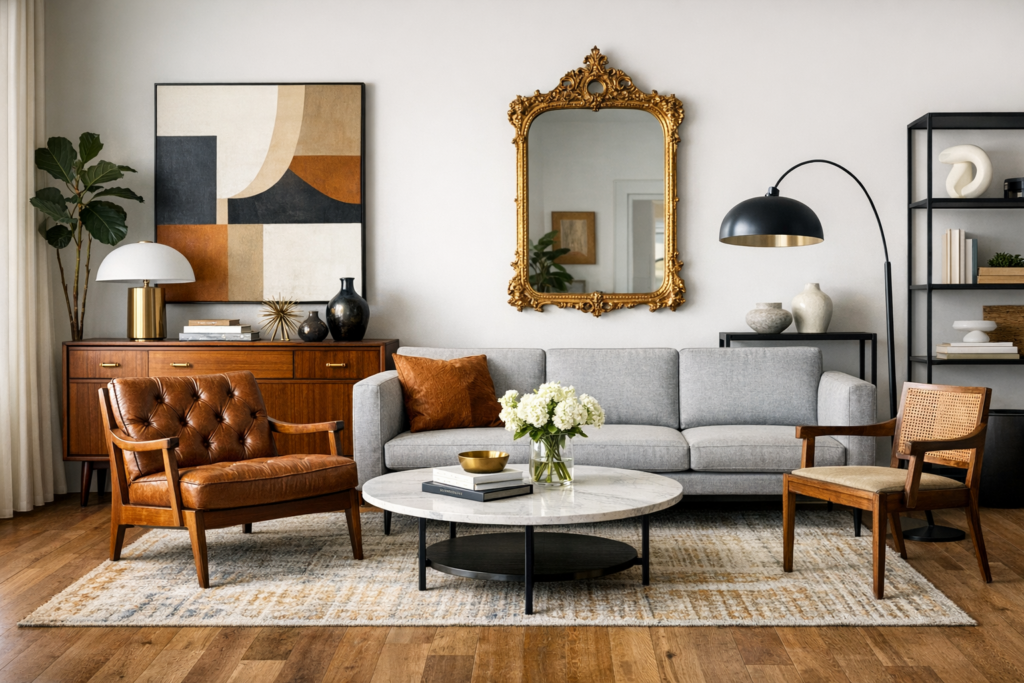
How to Mix Modern and Vintage Furniture
janvier 24, 2026Mixing modern and vintage furniture is one of the easiest ways to make a home feel collected, personal, and thoughtfully designed. Instead of buying a full matching set, you’re curating a space that reflects your tastes over time. The trick is balance: modern pieces bring clean lines and breathing room, while vintage furniture adds character, craftsmanship, and warmth.
Below, you’ll learn practical rules for combining eras without making your room feel cluttered or confused, plus specific pairings that work in real homes—whether you rent a studio apartment or own a family house. Along the way, you’ll find smart ways to shop and style using quality lifestyle finds from LifeDeals.
Why Modern + Vintage Works (And What Usually Goes Wrong)
Modern and vintage furniture complement each other because they solve different design problems:
Modern furniture tends to be streamlined, neutral, and functional. It helps a room feel open and current, especially in smaller spaces.
Vintage furniture brings texture, history, and detail—think patina, carved edges, real wood grain, or unique silhouettes that you won’t find in big-box catalog rooms.
When the mix doesn’t work, it’s usually due to one of these issues:
1) No unifying thread. If everything is a “statement,” nothing is. A room needs consistency in color, material, or shape.
2) Competing scales. A delicate mid-century chair can look lost next to an oversized modern sectional—or vice versa.
3) Too many time periods at once. A Victorian dresser, an Art Deco bar cart, a 1970s sofa, and ultra-minimalist tables can feel like a showroom of unrelated items unless something ties them together.
The goal is not to create a museum or a trend-board replica. It’s to make your space feel intentional.
Start With a Plan: Pick Your “Anchor” Era
A simple way to avoid visual chaos is to choose one era as the anchor and use the other as accents. You can always adjust later, but starting with a clear direction prevents impulse buys that don’t play well together.
Option A: Modern Base, Vintage Accents
This is the most beginner-friendly approach. Keep your largest items modern, then layer vintage in smaller doses.
Best for: small apartments, open-plan layouts, anyone who wants a clean look with personality.
Try this:
- Modern sofa + vintage coffee table
- Modern bed frame + vintage nightstands
- Modern dining table + vintage light fixture or sideboard
Why it works: Large modern pieces give structure; vintage pieces become focal points without overwhelming the room.
Option B: Vintage Base, Modern Updates
If you love antique wood tones, ornate details, or inherited furniture, use vintage as the foundation and introduce modern pieces for contrast.
Best for: older homes, traditional architecture, collectors, people who want a cozy layered feel.
Try this:
- Vintage dining set + modern pendant light
- Vintage dresser + modern mirror with a thin frame
- Vintage rug + modern sectional
Why it works: Modern elements prevent a vintage-heavy room from feeling dated, and they highlight the craftsmanship of older pieces.
5 Practical Rules for Mixing Styles Without Clashing
1) Repeat Materials to Create Continuity
Materials are one of the fastest ways to make different eras look like they belong together.
Easy matches:
- Wood + wood: Pair a vintage walnut sideboard with a modern oak coffee table by keeping undertones similar (warm with warm, cool with cool).
- Metal accents: If your modern furniture has black metal legs, echo that with a vintage lamp that has a dark base or iron detail.
- Glass and stone: A modern glass table can lighten the visual weight of a darker, more ornate vintage room.
Quick comparison: If your vintage pieces have warm honey or amber tones, modern pieces in warm whites, beige, camel leather, and brushed brass tend to look more cohesive than bright white lacquer and chrome.
2) Keep a Consistent Color Palette (Even if Styles Differ)
Color is the “glue” that lets you mix silhouettes freely. Aim for a simple palette:
- Base neutrals: warm white, cream, taupe, soft gray, or charcoal
- One to two accent colors: olive, navy, rust, terracotta, or muted blush
- One metal finish: black, brass, or chrome (mixing metals can work, but start with one)
Practical tip: If your vintage furniture includes strong wood grain, keep surrounding upholstery more solid and calm. If your modern pieces are very plain, you can afford a more patterned vintage rug or textile.
3) Balance Visual Weight (Not Just Size)
Visual weight is about how heavy an item feels in a room. A low modern sofa can feel “lighter” than a carved vintage cabinet, even if the cabinet is smaller.
How to balance:
- Pair a visually heavy vintage piece with something airy (glass, slender legs, open shelving).
- Use a large rug to visually “hold” a mix of pieces together.
- Break up heavy zones with negative space—avoid filling every corner.
Common mistake: Placing multiple bulky vintage pieces along one wall. If you love them all, separate them with a modern element (a clean-lined chair, a minimal bookcase, or a simple art print).
4) Choose One “Hero” Piece Per Zone
In each area of a room—sofa zone, dining zone, entry—pick one standout item. Everything else supports it.
Examples of hero pieces:
- A vintage credenza in the dining room
- A modern sculptural sofa in the living room
- An antique mirror in the entryway
Styling rule: When a vintage item is the hero, keep nearby modern pieces quieter (solid fabrics, simple shapes). When a modern item is the hero, use vintage accessories to add texture (a patinated tray, an old-frame mirror, a classic table lamp).
5) Use Textiles and Lighting as “Bridging” Elements
Textiles and lighting are easier to replace than furniture, so they’re perfect for fine-tuning the mix.
Textiles that blend eras:
- Persian or vintage-inspired rugs under modern seating
- Linen curtains to soften mid-century wood tones and modern silhouettes
- Throw pillows that repeat a wood tone or metal finish
Lighting that blends eras:
- A modern globe pendant over a vintage dining table
- A vintage-style pleated shade on a sleek modern lamp base
- Wall sconces that echo the finish of your cabinet hardware
If you’re looking to refresh a room without replacing major furniture, browsing lighting, rugs, and decor online at LifeDeals is a practical way to test the modern-vintage balance with lower commitment.
Room-by-Room Pairings That Look Intentional
Living Room: Clean Seating + Character Table
Winning combo: modern sofa + vintage coffee table or trunk.
A streamlined sofa creates a calm base. Then add a vintage coffee table with patina—wood scratches and worn edges are a feature, not a flaw. The contrast makes the room feel designed rather than “matched.”
What to watch: Height. Many vintage tables sit higher than modern sofas. Aim for a coffee table that’s roughly the same height as the sofa seat cushion (or slightly lower) so it feels comfortable and proportional.
Finishing touches: Use a modern tray to organize the tabletop (candles, coasters, a small vase). This keeps a rustic piece from reading messy.
Dining Room: Vintage Storage + Modern Table (Or the Reverse)
Two reliable layouts:
- Modern table + vintage sideboard: Great for open-plan spaces. The modern table stays visually light; the sideboard adds depth.
- Vintage table + modern chairs: A classic “designer move.” Simple chairs update the table instantly.
Comparison tip: If your vintage table has ornate legs, choose chairs with clean lines. If your vintage table is mid-century and sleek, you can add more sculptural modern chairs without clashing.
Bedroom: Modern Bed, Vintage Nightstands
Bedrooms should feel restful, so let modern simplicity lead. A modern bed frame in an upholstered fabric or simple wood gives you a calm anchor, while mismatched vintage nightstands add charm.
How to make mismatched nightstands look cohesive:
- Match the lamps (same shape or finish).
- Keep the nightstand heights close.
- Use similar hardware (swap knobs if needed).
Small upgrades like hardware, bedside lighting, and soft goods are easy to shop online; LifeDeals can help you coordinate finishes and colors without hunting across multiple stores.
Entryway: Vintage Statement + Modern Function
The entryway is ideal for bolder mixing because you’re not “living” there for hours.
Try this: vintage console + modern mirror, or modern console + vintage mirror.
Functional add-ons: a modern catchall tray, slim shoe storage, and hooks in a matching metal finish. This keeps the space tidy while still giving you that collected look.
Smart Shopping Tips: Quality, Budget, and What’s Worth Splurging On
Mixing modern and vintage is also a strategy for spending well. You can invest in comfort where it matters and add character without paying luxury prices for every item.
Where to Spend More
- Sofa and mattress: Comfort and durability matter daily.
- Rugs: A good rug anchors mixed styles and reduces noise (especially in apartments).
- Dining chairs: Stability and ergonomics are key.
Where to Save (Without Looking Cheap)
- Side tables and accent chairs: Vintage finds shine here, and modern options can be affordable.
- Lighting: High impact, often lower cost than furniture swaps.
- Decor and storage: Baskets, trays, shelves, and organizers make a room feel finished.
Vintage Condition Checklist (Fast but Important)
Before committing to a vintage piece, check:
- Structure: wobble, cracks, loose joints
- Drawers: do they slide smoothly?
- Smell: mustiness can be hard to remove from upholstered items
- Finish: surface wear is fine; deep water damage may not be
Practical comparison: Vintage wood furniture is often more repairable than budget flat-pack pieces. On the other hand, vintage upholstery can be costly to reupholster—so if you’re saving money, choose vintage in wood, metal, and solid construction, then go modern for upholstered comfort.
How to Make It Look Cohesive in Photos (And Real Life)
If you’ve ever looked at a room and thought, “It’s nice, but something’s off,” it’s usually missing cohesion. Here are quick fixes that make a noticeable difference:
- Art scale: One larger piece of art often looks better than many small frames scattered around.
- Consistent finishes: Repeat one metal finish at least 2–3 times (lamp, mirror frame, hardware).
- Intentional styling: Group decor in odd numbers (3 items on a shelf) and vary heights.
- Greenery: A plant softens the contrast between sleek modern lines and detailed vintage forms.
If you want a convenient way to pull the look together, explore coordinated decor, lighting, and storage solutions at LifeDeals—those finishing elements often make the biggest difference when mixing eras.
FAQ: Mixing Modern and Vintage Furniture
1) Can I mix multiple vintage styles with modern furniture?
Yes, but keep the vintage range tight. Pick one primary vintage era (for example, mid-century or traditional) and let any other vintage pieces be subtle. Use a consistent color palette and repeat a couple materials (like walnut and brass) to keep it cohesive.
2) How do I prevent a mixed-style room from feeling cluttered?
Use modern pieces to create visual breathing room: clean-lined seating, simple shelves, and solid-color textiles. Limit “statement” items to one per zone, and leave some surfaces clear so the room feels intentional rather than crowded.
3) What’s the easiest beginner mix that always looks good?
A modern neutral sofa paired with a vintage wood coffee table is a reliable starting point. Add a vintage-inspired rug and a modern floor lamp, and you’ll get a balanced look with minimal risk.
4) Should I match wood tones or mix them?
Mixing is fine, but aim for compatibility. Keep undertones consistent (mostly warm woods together or mostly cool woods together) and repeat each tone at least twice. If you have a dark vintage piece, echo it with a smaller dark element like a frame, tray, or lamp base.
Conclusion: Curate, Don’t Coordinate
Mixing modern and vintage furniture is less about rules and more about creating a home that feels lived-in, balanced, and uniquely yours. Start with an anchor era, repeat a few colors and materials, and use textiles and lighting to bridge the gap. With a thoughtful mix, your space will feel both current and timeless.
If you’re ready to refine your look, browse LifeDeals online for the modern essentials and the finishing touches—lighting, rugs, decor, and practical storage—that help vintage character and modern comfort work beautifully together.