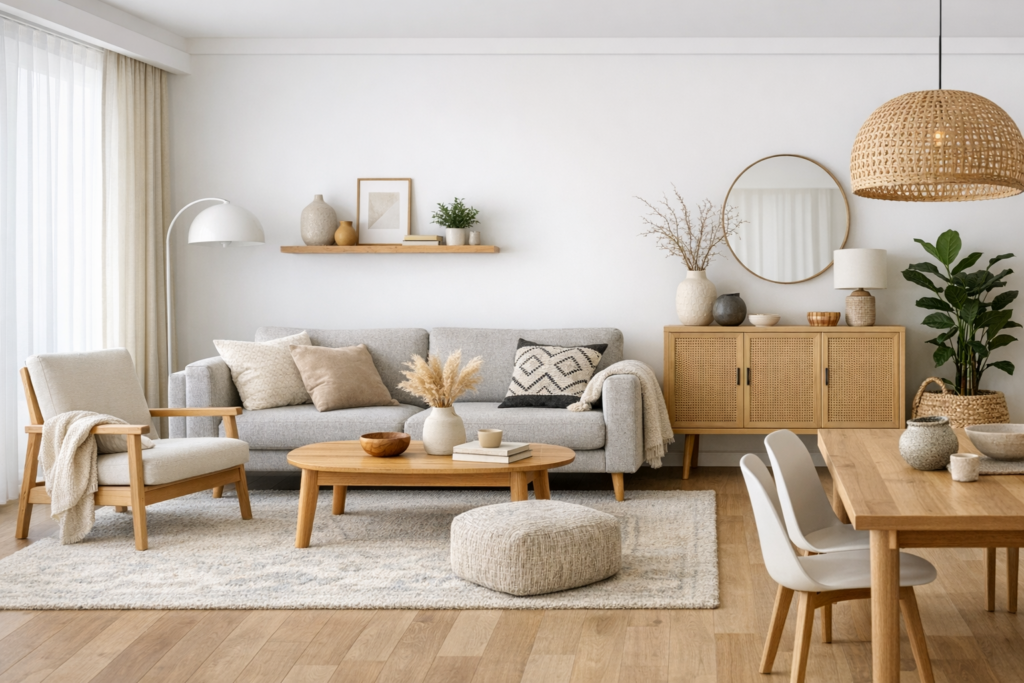
Scandinavian Interior Design: Furniture & Decor Guide
février 5, 2026Scandinavian interior design has earned its reputation for being calm, functional, and effortlessly inviting. It’s not about filling a room with “decor”—it’s about building a home that feels good to live in every day. Whether you’re furnishing a new place or refreshing a single room, the Scandinavian approach helps you make smart choices: fewer items, better quality, and a cohesive look that doesn’t date quickly.
This guide breaks down the key principles, furniture choices, materials, color palettes, and decor moves that define Scandinavian style—plus practical comparisons so you can decide what’s worth investing in. If you’re ready to shop as you plan, you’ll also find natural points where browsing LifeDeals can help you turn ideas into a real, livable space.
What Defines Scandinavian Interior Design (and Why It Works)
Scandinavian design grew out of Nordic climates and lifestyles: long winters, limited daylight, and a strong cultural focus on craftsmanship and practicality. That’s why it prioritizes comfort, brightness, and durability.
Core principles to follow
Use these as your checklist before you buy anything:
Function first. Furniture should solve a real need: seating that supports, storage that hides clutter, lighting that improves daily life.
Light and space. Scandinavian rooms aim to feel airy. The style leans on pale colors, smart lighting, and pieces that don’t visually “weigh down” the space.
Natural materials. Wood (especially light oak, ash, birch), wool, linen, leather, ceramics, and stone bring warmth without visual noise.
Clean lines, soft edges. Silhouettes are simple, but not harsh. You’ll see tapered legs, rounded corners, and gentle curves that feel welcoming.
Intentional contrast. A mostly light palette is balanced with a few darker accents (black metal, charcoal textiles, smoked wood) to add definition.
Scandi vs. minimalism vs. “modern”: quick comparisons
These styles overlap, but they’re not identical. Knowing the difference helps you shop more confidently.
Scandinavian vs. Minimalist: Minimalism can feel stark and ultra-restricted; Scandinavian design is typically warmer and more tactile, with cozy textiles and natural finishes.
Scandinavian vs. Mid-century modern: Mid-century favors bolder shapes and richer woods (walnut, teak). Scandinavian stays lighter, calmer, and more neutral.
Scandinavian vs. Contemporary modern: Contemporary can skew glossy and trend-driven. Scandinavian tends to be matte, natural, and long-lasting.
Furniture Essentials: What to Buy First (and What to Avoid)
If you want the Scandinavian look without wasting money, start with high-impact, high-use pieces. Then layer in smaller items only after the basics are right.
Living room: sofa, coffee table, and seating that last
Sofa: Choose a simple silhouette with clean lines, raised legs, and neutral upholstery. Linen-look fabric, performance weaves, or tightly woven blends work well for durability. Avoid overly tufted backs or bulky recliners that dominate the room.
Comparison: light fabric vs. dark fabric sofas
Light sofas (cream, sand, light gray) brighten the room and feel very Scandinavian, but they show stains more easily. Darker neutrals (charcoal, warm gray) hide wear better and still fit the style. If you have kids or pets, consider a mid-tone neutral plus washable throws.
Coffee table: Look for light wood, rounded corners, and slim legs. Oval and round tables are especially practical in small spaces because they’re easier to walk around.
Accent chairs: Add one chair with a contrasting texture: boucle, leather, or a woven fabric. Keep the frame simple (wood or matte metal). One statement chair is usually enough.
Tip: When browsing LifeDeals, filter for “solid wood,” “oak finish,” or “tapered legs” to quickly narrow down pieces that naturally read as Scandinavian.
Dining area: a warm wood anchor and comfortable seating
The dining table is often the heart of a Scandinavian home—used for meals, work, school projects, and hosting.
Dining table: A rectangular light-wood table is the classic choice; round tables feel softer and are great for small apartments. If you entertain, consider an extendable table to keep daily life streamlined.
Comparison: solid wood vs. veneer
Solid wood costs more, but it can be refinished and tends to age beautifully. Veneer is more budget-friendly and can look excellent, but it’s less forgiving if chipped. For renters or short-term spaces, veneer may be the smarter pick; for a long-term home, solid wood is often worth the upgrade.
Dining chairs: Prioritize comfort. Scandinavian chairs are often simple, but not rigid—curved backs and supportive seats matter. Mixing chair styles can work if you keep the palette consistent (for example, all light wood with varying silhouettes).
Bedroom: calm, clutter-free, and textile-driven
Scandinavian bedrooms are designed for rest: minimal visual noise, soft lighting, and breathable fabrics.
Bed frame: Look for a low-profile or mid-height frame in light wood or a muted upholstered finish. Avoid ornate headboards and heavy footboards.
Nightstands: Floating shelves or slim nightstands keep the room feeling open. One drawer is usually enough if you’re disciplined about what you store.
Comparison: matching bedroom set vs. curated pieces
Matching sets are easy, but they can look flat. A more Scandinavian approach is coordinated, not identical: a wood bed frame paired with simple white nightstands, or two different nightstands in the same finish. The key is harmony in tone and proportion.
Storage: the secret to a serene Scandinavian home
Scandinavian style depends on clear surfaces. If your storage doesn’t work, the room won’t feel calm—no matter how beautiful the furniture is.
Go-to storage pieces:
Sideboards: Perfect for dining rooms and living areas; choose flat fronts and subtle pulls.
Closed bookcases: Combine open shelves for a few curated objects with closed cabinets for everything else.
Entry benches with compartments: A practical way to manage shoes, bags, and winter gear.
If you’re building a room from scratch, check LifeDeals for sideboards and storage benches first—these pieces do the heavy lifting and make the “minimal” look realistic.
Color, Materials, and Textures: How to Get the Scandi Look Right
Scandinavian design isn’t just white walls and pale wood. The best spaces feel layered and lived-in—just edited.
A reliable Scandinavian color palette
Start with a light base, then add contrast and warmth.
Base: warm white, soft cream, light gray, pale greige
Wood tones: light oak, ash, birch; use one main tone and one secondary tone
Contrast: matte black, charcoal, deep navy, forest green
Warm accents: camel, tan leather, muted terracotta, brass (used sparingly)
Practical rule: Keep most large surfaces light (walls, rug, sofa), then add 2–3 darker elements (lamp, frames, chair legs, side table) to create definition.
Material choices that feel authentic (and wear well)
Wood: The backbone of Scandinavian interiors. Choose matte or satin finishes rather than glossy. Visible grain adds character without feeling busy.
Textiles: Linen, cotton, wool, and boucle are staples. They add softness and improve acoustics—especially helpful in apartments with hard floors.
Metal: Matte black or brushed finishes work best. Use metal for lighting, chair legs, and small accents rather than large shiny surfaces.
Ceramics and glass: Handmade-looking ceramics (even if they’re mass-produced) and simple glass vases add quiet interest.
Texture layering: the easiest upgrade for renters
If you can’t change floors or paint walls, focus on textiles and lighting.
Rug: Use a light neutral rug to soften the room and visually connect furniture.
Throws: Drape a wool throw on the sofa or bed; choose one textured piece rather than multiple loud patterns.
Cushions: Mix two solids and one subtle pattern (like a thin stripe) for a balanced look.
Window treatments: Sheer curtains brighten rooms while adding softness and privacy.
Browsing LifeDeals for neutral rugs, linen-look curtains, and wool-blend throws is a quick way to add Scandinavian warmth without major renovations.
Lighting and Decor: Practical Steps to Make It Feel Cozy, Not Cold
Lighting is where Scandinavian interiors shine—literally. In darker months, layering light sources is essential, and it also makes rooms feel more welcoming year-round.
Use three layers of lighting
Ambient: Ceiling fixture or pendant for overall brightness.
Task: Reading lamps, desk lamps, under-cabinet lighting.
Accent: A small lamp on a sideboard, LED candles, or a soft wall sconce.
Comparison: warm vs. cool bulbs
Warm white (around 2700K–3000K) feels cozy and is the Scandinavian default for living spaces and bedrooms. Cool white can feel harsh and clinical; save it for garages, utility spaces, or very task-heavy areas.
Decor that looks intentional (without clutter)
Scandinavian decor is curated. Every object earns its place by adding function, texture, or meaning.
Wall art: Choose a few larger pieces instead of many small ones. Black frames or light wood frames are the easiest fit. Photography, line drawings, and calm abstracts work well.
Greenery: One or two healthy plants beat a dozen struggling ones. If your home lacks light, choose low-maintenance varieties or place plants near windows and keep other surfaces clear.
Mirrors: A round mirror in the entryway or above a console bounces light and visually enlarges small rooms.
Decor rule: If you add something new, remove or relocate something else. That “edited” feeling is a big part of why Scandinavian interiors feel peaceful.
Small-space Scandinavian: apartment-friendly tips
Choose raised-leg furniture: Seeing more floor makes rooms feel larger.
Use one large rug: Too many small rugs can chop up the space.
Opt for closed storage: Visual calm matters more in tight layouts.
Stick to a tight palette: Repeating the same 2–3 tones across rooms creates flow.
Smart Shopping Guide: Build a Scandinavian Room Without Overbuying
It’s easy to overdo “Scandi” by buying lots of small decor pieces. A better strategy is to invest in a few anchors, then refine slowly.
A simple buying order that works
Storage first: Sideboard, media console, entry storage. Calm starts here.
Seating second: Sofa, dining chairs—comfort affects daily life the most.
Lighting third: Add layers; don’t rely on one overhead light.
Textiles fourth: Rug, curtains, throws to soften and warm.
Decor last: Art, mirrors, ceramics, greenery—only after the room functions well.
How to spot quality (even when shopping online)
When you’re comparing options, look for details that signal longevity:
Materials listed clearly: solid wood, plywood, metal; avoid vague “wood-like” descriptions when possible.
Joinery and construction notes: reinforced corners, sturdy frames, quality hardware for drawers.
Dimensions that fit your space: measure before you fall in love with a piece.
Easy-care finishes: performance fabrics, wipeable surfaces, removable cushion covers.
If you want a streamlined way to shop, explore LifeDeals collections by room (living, dining, bedroom). It helps you compare finishes and silhouettes side-by-side, which is the fastest route to a cohesive Scandinavian look.
FAQ: Scandinavian Interior Design, Furniture & Decor
1) Can Scandinavian style work in a home with dark floors?
Yes. Use light rugs, pale upholstery, and warm lighting to balance the depth of the floors. Choose furniture in lighter wood tones and keep large decor elements simple so the space doesn’t feel heavy.
2) What’s the difference between Scandinavian and “Japandi”?
Japandi blends Scandinavian warmth with Japanese restraint. It often uses slightly darker woods, fewer decorative items, and more emphasis on low-profile forms. If you like Scandi but want it more minimal and grounded, Japandi is a natural next step.
3) How do I make Scandinavian interiors feel cozy instead of cold?
Layer textures (wool throw, textured cushions, a soft rug), add warm lighting (2700K–3000K), and include a few natural, warm accents like leather or ceramics. Cozy comes from tactile variety, not from adding lots of objects.
4) What are the best Scandinavian decor items for beginners?
Start with a neutral rug, a pair of matching warm-glow lamps, sheer curtains, a round mirror, and one large piece of wall art. These deliver an immediate “Scandi” feel without clutter.
Conclusion: Create a Scandinavian Home That Fits Real Life
Scandinavian interior design is a practical style disguised as a beautiful one. When you focus on function, light, natural materials, and thoughtful layering, your home becomes easier to live in—and easier to keep looking good. Start with the pieces that shape daily comfort (storage, seating, lighting), then add textiles and decor with restraint.
When you’re ready to turn your plan into purchases, explore LifeDeals online to compare Scandinavian-friendly furniture and decor by room, finish, and size. A few well-chosen items can transform your space into something calm, bright, and genuinely welcoming.